Supporting refinery maintenance, upstream operations and critical equipment movements through coordinated international freight forwarding, import compliance and project delivery.
Turnaround maintenance (TAM) is a critical phase in the lifecycle of oil refineries and upstream oil and gas facilities. During planned maintenance, equipment inspection, repair and replacement activities must be coordinated carefully to support the safe and timely return of assets to operation.
When pumps, compressors and associated components are required from overseas manufacturers, logistics becomes an important part of project planning. Supplier readiness, export documentation, international freight, Nigerian import procedures, customs clearance and inland transportation can all affect when equipment reaches the maintenance site.
For procurement teams, maintenance contractors, engineering companies and oil and gas operators, the challenge is not simply to ship equipment to Nigeria. It is to coordinate each stage of the movement around project requirements, technical documentation, compliance obligations and delivery priorities.
Valuehandlers supports international freight forwarding, customs clearance coordination and project-focused logistics for businesses importing critical equipment into Nigeria. Our approach is built around planning, documentation, stakeholder coordination and shipment visibility.
1. Sourcing Pumps and Compressors for Maintenance Projects
The appropriate pump or compressor depends on the operating environment, technical specifications, process requirements and maintenance scope. Equipment selection and procurement should remain under the direction of the client’s engineering and procurement teams.
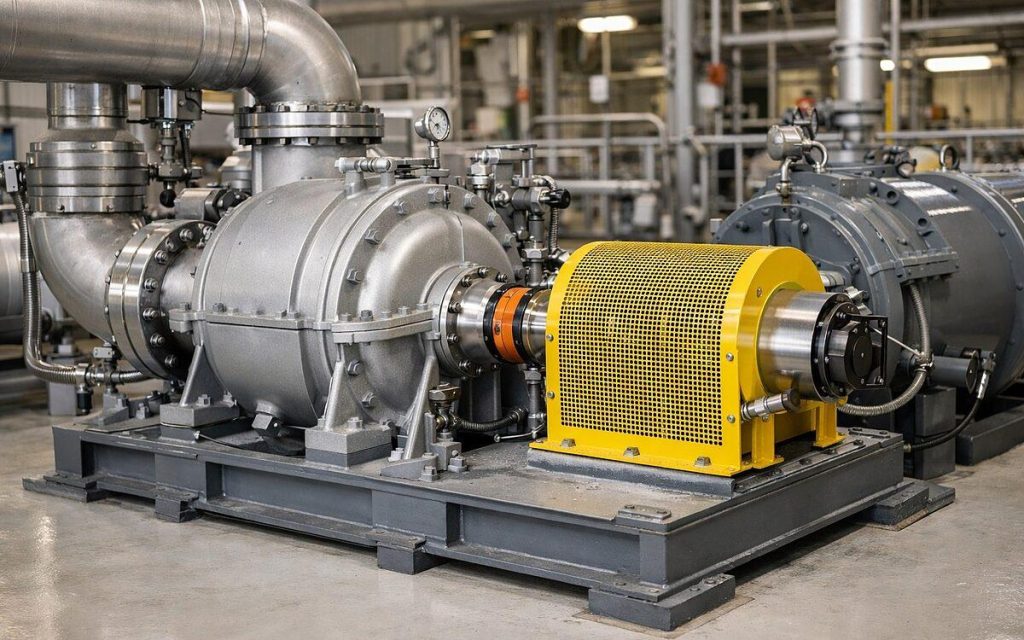
Common equipment categories include:
- Centrifugal pumps: Used in many industrial fluid-transfer and process applications.
- Positive displacement pumps: Used where specific flow and pressure characteristics are required.
- Submersible pumps: Designed for applications where the pump operates while submerged.
- Reciprocating compressors: Used in applications requiring particular pressure and capacity characteristics.
- Centrifugal compressors: Common in large-scale industrial and process applications.
- Screw compressors: Used across a range of industrial and gas-handling applications.
International manufacturers with equipment portfolios in relevant categories include Grundfos, Flowserve, Sulzer, Atlas Copco, Ingersoll Rand, Siemens Energy and Elliott Group. The suitability of any manufacturer or product must be assessed against the project’s technical specifications and procurement requirements.
International sourcing and supplier coordination
Depending on equipment availability, specifications and commercial terms, procurement teams may source equipment or spare parts from the United States, China, Germany, the United Kingdom, the United Arab Emirates and other manufacturing or distribution centres.
Logistics planning should begin before the equipment is ready for collection. Key considerations include:
- Confirming the supplier’s cargo readiness date and collection location.
- Obtaining accurate dimensions, gross weight and packing details.
- Establishing whether the cargo is standard, oversized, heavy or subject to special handling requirements.
- Confirming export documentation and any applicable transport restrictions.
- Selecting an appropriate freight mode based on urgency, shipment characteristics and budget.
- Aligning the expected arrival and delivery dates with the maintenance schedule.
Valuehandlers can coordinate the logistics requirements around supplier collection, export arrangements and international transportation, subject to the agreed service scope.
2. Choosing the Right Freight Option for Pumps and Compressors
The appropriate freight solution depends on the criticality of the equipment, its size and weight, supplier readiness, the project deadline and the total logistics cost.
Air freight for time-critical components
Air freight may be appropriate for urgent spare parts, smaller components and equipment needed to support a maintenance milestone. It can reduce international transit time compared with many sea freight options, although actual delivery depends on airline capacity, routing, cargo acceptance, customs procedures and final delivery arrangements.
Explore our Air Freight Service to Nigeria.
Sea freight for larger or planned shipments
Sea freight may be more suitable for heavy equipment, large machinery, bulk consignments and shipments where the maintenance programme allows a longer lead time. Depending on cargo dimensions, weight and handling requirements, shipments may move by full container load, less-than-container load or specialised project cargo arrangements.
Planning should account for vessel schedules, port handling, customs clearance, cargo evacuation and transportation to the final site.
Explore our Ocean Freight to Nigeria.
Supplier collection and door-to-door coordination
Where procurement terms require collection from the manufacturer’s premises, logistics planning may begin at the supplier’s warehouse or factory. Depending on the agreed scope, this can include collection coordination, export documentation support, international freight, Nigerian customs clearance coordination and onward transportation.
For project cargo, the transport plan should also consider lifting requirements, packaging, route restrictions, offloading equipment and access to the final delivery location.
The objective is to select a logistics solution that reflects the project’s actual requirements—not simply the lowest initial freight rate.
3. Import Documentation and Compliance for Nigeria
Accurate documentation is essential when importing industrial equipment into Nigeria. Incomplete, inconsistent or incorrect information can lead to queries, additional processing, delays and unplanned costs.
Depending on the transaction, equipment classification and applicable regulations, the documentation and compliance process may involve:
- Proforma and commercial invoices: To establish the proposed transaction and declared commercial value.
- Packing list: Showing package details, dimensions, quantities and weights.
- Bill of lading or air waybill: The transport document appropriate to the freight mode.
- Form M: Where required under Nigeria’s import procedure.
- PAAR: The Pre-Arrival Assessment Report generated through the applicable customs process.
- Product conformity documentation: Including SONCAP documentation where the specific product and applicable rules require it.
- Technical specifications and product information: To support classification, regulatory assessment and any required permits.
- Other applicable permits or approvals: Depending on the equipment, its intended use and the relevant regulatory requirements.
The exact requirements should be confirmed for each shipment before dispatch. Not every pump, compressor or industrial component is subject to the same approvals.
Pre-shipment documentation checks
Before cargo leaves the country of export, the importer and its logistics partners should confirm that:
- The supplier’s commercial documents accurately describe the equipment.
- The declared value, quantities, origin and shipment details are consistent.
- The proposed HS classification has been reviewed against the actual product specifications.
- Applicable import procedures and regulatory approvals have been identified.
- Cargo dimensions, gross weight and packing details are available for freight planning.
- The consignee, delivery address and required project delivery date have been confirmed.
Valuehandlers supports the coordination of shipping documentation and customs clearance requirements within the agreed service scope. Early checks help identify potential issues before they affect the shipment schedule.
4. Customs Clearance, Tariff Classification and Cost Planning
Customs classification is a significant consideration when importing pumps, compressors and industrial spare parts. The correct tariff classification depends on the product’s design, function, specifications and applicable Nigerian tariff provisions.
It is therefore unwise to apply a single HS code or duty rate to all pumps or compressors based only on a broad equipment description. Classification and applicable duties, levies and taxes should be verified against the current tariff and the specific shipment documentation before importation.
For effective landed-cost planning, procurement teams should consider more than the international freight charge. Depending on the shipment, the total may include:
- International freight and applicable surcharges.
- Origin handling and export-related charges.
- Customs duties, levies and applicable taxes.
- Destination terminal and cargo handling charges.
- Storage, demurrage or detention where incurred.
- Customs clearance and documentation service fees.
- Inland haulage, special handling and offloading costs.
These costs should be assessed as early as practical to support budgeting and procurement decisions.
Valuehandlers helps clients coordinate freight and customs clearance arrangements, with an emphasis on documentation quality, cost visibility and compliance with applicable import procedures.
5. Delivering Equipment to Refineries and Oil & Gas Project Sites
Arrival at a Nigerian airport or seaport is not the end of the logistics process. Equipment must still be cleared, evacuated and transported to the designated delivery location in accordance with the project requirements.
Depending on the shipment and destination, delivery planning may involve:
- Customs clearance coordination at the relevant port or airport.
- Cargo release and evacuation planning.
- Selection and coordination of suitable haulage providers.
- Assessment of equipment dimensions, weight and handling requirements.
- Route and site-access considerations.
- Coordination of delivery appointments and offloading arrangements.
- Shipment updates and communication with the relevant project stakeholders.
Destinations may include refinery facilities, industrial plants, maintenance contractors’ premises, warehouses and designated oil and gas project locations across Nigeria.
For oversized or heavy equipment, the transport plan may require additional route assessment, lifting arrangements, permits or specialised vehicles. These requirements should be identified before dispatch wherever possible.
A well-coordinated delivery plan connects international transportation with the operational realities of the final project site.
6. Why Logistics Planning Matters During Turnaround Maintenance
Turnaround schedules can involve multiple contractors, specialist technicians, replacement parts and equipment arriving from different suppliers. A delay affecting one critical component may require teams to review work sequencing or adjust maintenance activities.
Logistics cannot eliminate every source of delay, but structured planning can help project teams identify and manage transport and documentation risks earlier.
What procurement and project teams should do
Start planning before cargo readiness. Engage logistics support while suppliers are confirming production, packing and collection dates.
Prioritise critical equipment. Identify components whose arrival dates are closely linked to maintenance milestones.
Use realistic lead times. Account for supplier preparation, export processes, freight schedules, import procedures and inland delivery—not just the international transit estimate.
Validate documentation early. Resolve classification, invoice, packing and regulatory questions before shipment wherever possible.
Evaluate total landed cost. Compare transport options using the complete cost and timing implications, not freight charges alone.
Maintain clear communication. Establish who is responsible for shipment updates, documentation queries, clearance coordination and final delivery.
These measures help procurement, logistics and engineering teams make informed decisions as the maintenance schedule progresses.
7. Valuehandlers: Logistics Support for Oil & Gas Equipment Imports
At Valuehandlers International, we recognise that industrial logistics requires more than arranging transportation. It demands an understanding of cargo requirements, import procedures, delivery dependencies and the coordination required to move equipment across multiple stages of the supply chain.
We support businesses importing industrial and oil and gas equipment into Nigeria through international freight forwarding, customs clearance coordination and onward delivery arrangements, according to the agreed scope of each engagement.
Our approach emphasises:
- International freight coordination: Supporting air and sea freight movements from overseas sourcing locations.
- Documentation and compliance coordination: Helping clients prepare and review shipment information and identify applicable import requirements.
- Customs clearance support: Coordinating clearance arrangements and relevant stakeholders.
- Project-focused delivery planning: Considering cargo characteristics, destination requirements and delivery priorities.
- Shipment communication: Providing updates and coordinating follow-up within the agreed service arrangements.
- Cost and schedule awareness: Helping clients assess freight options and the wider logistics costs that affect project planning.
For refinery maintenance contractors, engineering procurement teams, industrial operators and equipment suppliers, the value lies in having a logistics partner that understands the importance of planning, coordination and professional execution.
Planning an Import of Pumps or Compressors into Nigeria?
If your organisation is preparing for turnaround maintenance, equipment replacement or an industrial project, early logistics planning can help identify documentation requirements, freight options and delivery considerations before the shipment is dispatched.
Contact Valuehandlers to discuss your equipment type, supplier location, cargo dimensions, destination and required delivery date. Our team can assess the logistics requirements and advise on the next steps within the scope of the requested service.
Valuehandlers International
Website: www.valuehandlers.com
Telephone: +234 803 224 1768
WhatsApp: +234 808 237 5017
Email: customercare@valuehandlers.com
Valuehandlers — We help businesses move critical cargo with greater planning, visibility and confidence.