
Understanding the Form M Process for Importation into Nigeria
Importing goods into Nigeria is governed by several regulatory agencies, with each playing a specific role in ensuring compliance with Nigeria’s import regulations. One of the most critical requirements for every importer is the successful opening and approval of a Form M.
At Valuehandlers International Limited, we often advise importers that the success of every import transaction begins long before the cargo is shipped. Proper documentation at the planning stage prevents unnecessary delays, additional costs, and compliance issues when the cargo arrives in Nigeria.
What is Form M?
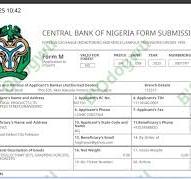
Form M is a mandatory electronic declaration required for all commercial importations into Nigeria. It serves as the official import declaration submitted through the Nigeria Single Window platform and enables the Nigeria Customs Service, the Central Bank of Nigeria (CBN), Authorized Dealer Banks, and other regulatory agencies to monitor and regulate import transactions.
Simply put, no commercial import should commence without an approved Form M.
Step 1: Obtain the Required Documents
Before opening a Form M, the importer must first obtain the following documents:
1. Proforma Invoice
This is issued by your overseas supplier and should clearly indicate:
- Description of the goods
- Quantity
- Unit price
- Total value
- Incoterms
- Country of origin
- Supplier’s details
The Proforma Invoice forms the foundation of the Form M application.
2. Marine Cargo Insurance Certificate
A valid Cargo Insurance Certificate is required before Form M can be processed. The insurance must comply with Nigerian import regulations and adequately cover the shipment during transit.
3. Product Certificate (PC)
The Product Certificate (PC) is issued under Nigeria’s Standards Organisation of Nigeria Conformity Assessment Programme (SONCAP) for regulated products.
Importantly, the Product Certificate should be requested from your supplier while discussing the Proforma Invoice, not after shipment arrangements have commenced.
This ensures sufficient time to complete the required conformity assessment before shipment.
Step 2: Activate the Product Certificate
Once the Product Certificate has been received from the supplier, the importer logs into the Nigeria Single Window Portal to activate the Product Certificate.
Only an activated Product Certificate can be used during the Form M application.
Step 3: Complete the Form M Application
The importer then logs into the B’Odogwu platform and selects the Authorized Dealer Bank (the transaction bank through which the importation will be financed).
The following documents are uploaded:
- Proforma Invoice
- Marine Cargo Insurance Certificate
- Activated Product Certificate (PC)
The importer then completes all required information on the electronic Form M application.
Accuracy at this stage is extremely important. Any inconsistency between the uploaded documents and the information entered may delay approval or result in the application being queried.
Once all mandatory information has been correctly completed, the system automatically generates a Form M Number.
Step 4: Bank Review and Approval
Your Authorized Dealer Bank receives the completed Form M electronically and reviews every detail submitted.
The bank verifies:
- Importer’s information
- Supplier’s information
- Product details
- HS Codes
- Currency
- Shipment terms
- Supporting documents
- Regulatory compliance
If everything is correctly completed, the bank processes the application and forwards it for regulatory approval.
It is important to note that a bank will only approve a properly completed and compliant Form M.
Step 5: Issuance of the BA Number
Following successful processing, the Central Bank of Nigeria (CBN), through the Authorized Dealer Bank, issues a BA Number.
This signifies that the Form M has been approved and is now valid for the import transaction.
Understanding the Difference
- Form M Number – Generated by your Authorized Dealer Bank and identifies your import transaction.
- BA Number – Issued by the Central Bank of Nigeria (CBN) through the Authorized Dealer Bank as evidence that the Form M has received regulatory approval.
The prefix of the Form M number generally identifies the Authorized Dealer Bank. For example, a Form M opened through First Bank carries the bank’s identifying code as part of the Form M reference.
Step 6: Nigeria Customs Registration
After approval, the Nigeria Customs Service electronically reviews the approved Form M and registers it within its system.
Once this process has been completed, the Form M status changes to “Registered.”
This marks the completion of the Form M opening process.
At this point, the shipment can proceed with the next stages of the importation process, including supplier shipment arrangements, issuance of shipping documents, Pre-Arrival Assessment Report (PAAR) processing, cargo arrival, customs clearance, and final delivery.
Common Mistakes Importers Should Avoid
Many delays experienced during customs clearance originate from errors made during Form M processing. Some of the most common mistakes include:
- Opening Form M with an incorrect HS Code.
- Differences between the Proforma Invoice and supporting documents.
- Incorrect product descriptions.
- Failure to activate the Product Certificate.
- Incorrect shipment terms or Incoterms.
- Wrong supplier information.
- Delayed submission of required documents.
- Attempting to ship cargo before Form M approval.
Correcting these issues after shipment can be costly and may significantly delay cargo clearance.
The Valuehandlers Advisory
At Valuehandlers, we believe that successful importation begins with regulatory compliance—not when the vessel arrives, but before the supplier dispatches the goods.
Our advisory approach goes beyond processing documents. We work with importers from the planning stage to ensure every regulatory requirement is satisfied before shipment. This proactive approach minimizes delays, reduces avoidable costs, and provides greater certainty throughout the import process.
Our Form M advisory services include:
- Reviewing Proforma Invoices before Form M application.
- Advising on the correct HS Code classification.
- Coordinating Product Certificate (PC) and SONCAP compliance.
- Arranging Marine Cargo Insurance.
- Assisting with Form M preparation and submission.
- Liaising with Authorized Dealer Banks.
- Supporting PAAR processing.
- Providing customs advisory and clearance support.
- Coordinating end-to-end international freight forwarding and cargo delivery.
Whether you are importing machinery, raw materials, consumer goods, medical equipment, project cargo, or containerized shipments, our experienced customs and trade compliance professionals ensure your documentation is accurate from the outset.
At Valuehandlers, our mission is “Facilitating Commerce & Individuals logistics through innovative ideas and solution”. By combining customs advisory, regulatory compliance, international freight forwarding, customs clearance, and last-mile delivery, we provide a seamless end-to-end import solution that enables businesses to move cargo into Nigeria efficiently, compliantly, and with confidence.